What to Feed a Dog Recovering From an Upset Stomach
A neurologist's practical, evidence-anchored guide to feeding a dog through GI recovery — what to offer first, what to avoid, and when a rumbling belly is more than a diet problem.
What to feed a dog recovering from an upset stomach depends less on a magic bland-diet recipe and more on timing, texture, and watching for the signs that mean it's not "just a stomach thing."
On this page
A twelve-pound terrier mix named nothing in particular — just “the dog on exam table two” — had thrown up three times overnight and skipped breakfast. Her owner had already Googled bland diets, boiled chicken, and pumpkin, and arrived with a list of questions longer than the appointment slot. That’s a familiar scene in general practice, and it’s also, honestly, where a neurologist’s training in whole-patient assessment turns out to matter: the gut and the nervous system are wired together closely enough that how a dog eats, and how eagerly, is itself a piece of diagnostic information.
The first 24 hours: less about restriction, more about observation
The old advice to withhold food entirely for a day has mostly fallen out of favor. Current thinking favors offering a small, easily digestible meal sooner rather than later, because an empty gut can actually slow healing of the intestinal lining. What matters more than starvation is texture and fat content — a low-residue, moderate-fat meal asks less of a stressed gut than a rich or fibrous one does.
That single idea — low-residue, moderate-fat — isn’t just a home-remedy hunch. It’s the same nutritional principle used in managing more serious pancreatic disease. As one review on exocrine pancreatic insufficiency notes, Journal of the American Veterinary Medical Association: EPI is treated by pancreatic enzyme replacement therapy, nutritional management (low-residue diets with moderate fat content), and supplementation of cobalamin. A dog with a simple bout of dietary indiscretion doesn’t have EPI, but the underlying logic — go easy on fat and bulk while the gut settles — scales down cleanly to the everyday upset-stomach case.
A short, single-sentence point worth sitting with: bland food is a strategy, not a cure.
Choosing the actual bowl: boiled chicken and rice versus commercial GI formulas
Boiled, skinless chicken breast with plain white rice remains the classic home option, and it works for a straightforward reason — it’s low-fat, low-fiber, and easy to portion. Cottage cheese or plain boiled turkey can substitute if a dog dislikes chicken. Commercial veterinary gastrointestinal diets, by contrast, are formulated to the same low-residue, moderate-fat logic but with more consistent nutrient balance, which matters if recovery stretches past a couple of days. For a dog eating a home-cooked bland meal for more than 48–72 hours, that nutritional gap is the real argument for switching to a complete commercial GI formula rather than continuing indefinitely.
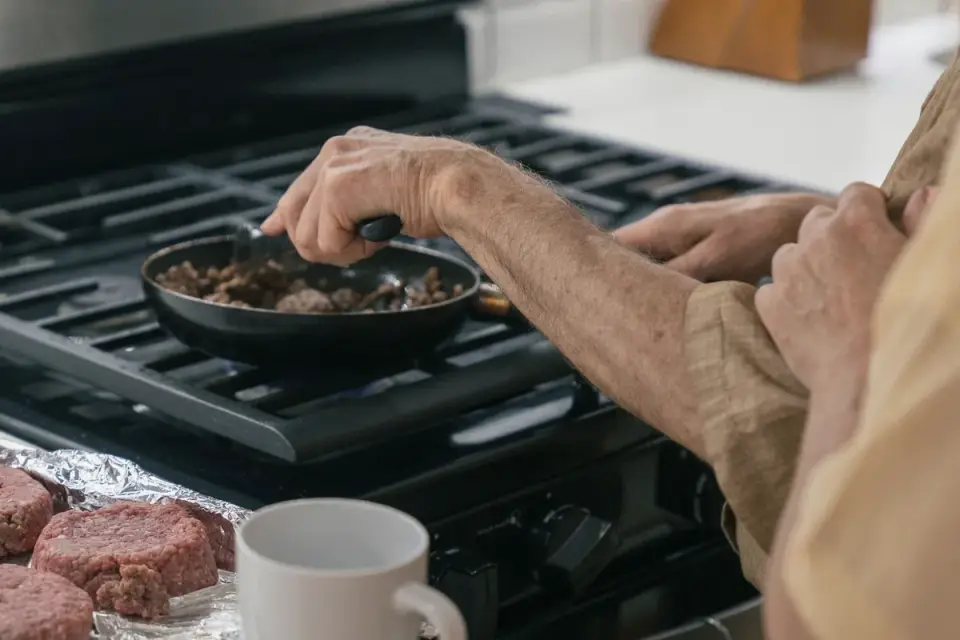
By day three, the terrier mix from the exam table was eating her chicken-and-rice meals eagerly, but her owner called back concerned because the dog — now weighing in at 11.8 pounds, down half a pound from baseline — still had loose stool despite finishing every bowl. That’s the tradeoff bland diets don’t advertise: appetite returning doesn’t always mean the gut lining has caught up. In that visit, the plan shifted from “wait it out” to layering in a fiber source and reassessing at 48 hours, because persistent stool changes past 72 hours warrant a second look rather than more patience.
Fiber, probiotics, and where the evidence actually stands
Pumpkin gets recommended constantly, and for good reason on the mechanism level: pumpkin fiber is a gentle, natural source of both soluble and insoluble fiber, which can help firm loose stool by absorbing excess water in the gut while also feeding beneficial bacteria. It’s food therapy in the truest structure/function sense — not a treatment for an underlying disease, but support for a system trying to right itself.
Probiotics occupy murkier ground than marketing suggests. A recent randomized trial looking at probiotic response in dogs found that Frontiers in Veterinary Science: diversity metrics did not distinguish non-responders from responders — meaning that even in dogs who improved, the underlying shift in gut bacterial diversity looked no different from those who didn’t. I still reach for a probiotic in mild cases, the same way I’d reach for acupuncture alongside imaging in a neuro case: not because either move is proven to reverse the underlying problem, but because the mechanism is plausible, the risk is low, and the whole patient tends to do better when you support more than one system at once. The honest caveat is that we can’t yet predict, from gut diversity alone, which dogs will respond.
When it’s not “just a stomach thing”
Here’s the edge case that changes the calculus entirely. A seven-year-old Labrador, 68 pounds, presented after five days of intermittent vomiting that the owner had been managing at home with rice and chicken — appropriate first steps — but the dog had also started circling and seemed mildly disoriented the evening before the visit. Vomiting plus a neurologic sign, even a subtle one, moves a case out of “feed through it” territory and into “image it” territory fast, because metabolic derangement from prolonged GI upset can affect the brain, and some primary neurologic conditions present first as vomiting. That dog is not a bland-diet case anymore; it’s a bloodwork-and-imaging case. Recognizing that distinction, and not stalling on home remedies past the point they’re helping, is the single most important judgment call in this whole topic.
A few practical guardrails for the straightforward cases: skip dairy beyond small amounts of plain yogurt or cottage cheese, since many dogs are lactose-intolerant; avoid raw bones, table scraps, and anything spiced or fatty during recovery; and reintroduce regular food gradually over two to three days rather than switching back all at once. Life stage matters too — for details on adjusting amounts as a dog ages, see How Feeding Amounts Change With Age, and for smaller dogs whose GI tolerance runs differently than larger breeds, Feeding a Small or Toy-Breed Dog: A Neurologist’s Practical Guide is worth a look.
Where I land
If a dog is otherwise bright, drinking normally, and had one rough night, I favor early refeeding with a low-residue, moderate-fat meal over prolonged fasting — the evidence on gut healing supports feeding sooner, not later. I’ll add pumpkin for stool consistency and consider a probiotic for mild cases, with the honest disclosure that we can’t yet predict which dogs will respond to it. But vomiting beyond 24 hours, any blood in stool or vomit, lethargy, or any neurologic sign — stumbling, head tilt, disorientation — means the kitchen strategy is over and it’s time for bloodwork and, if warranted, imaging. A homemade bland diet buys you a day or two of observation, not a diagnosis.
Two ingredients worth avoiding entirely while a dog’s stomach is unsettled, regardless of how “natural” they sound: onions in any form, since Can Dogs Eat Onions? Yes, They’re Toxic — Here’s Why explains why they’re never appropriate, and unfamiliar wild mushrooms, covered in Can Dogs Eat Mushrooms? A Vet Nutritionist’s Field Guide — both can mimic or worsen GI symptoms in ways that muddy the picture right when you need clarity most.
Frequently asked questions
Should I withhold food from a dog with an upset stomach for 24 hours?
Most current guidance favors offering a small, low-residue, moderate-fat meal sooner rather than a full day of fasting, since an empty gut can slow the intestinal lining's recovery.
How long can I feed a bland diet before switching back to regular food?
Home-cooked bland meals like chicken and rice aren't nutritionally complete, so plan to transition back to a regular diet, or a commercial GI formula, within two to three days if symptoms are improving.
Sources
- Nutritional Management in Exocrine Pancreatic Insufficiency — Journal of the American Veterinary Medical Association
- Probiotic Response and Gut Microbial Diversity in Dogs — Frontiers in Veterinary Science