Excitement vs Overarousal in Dogs: How to Tell Them Apart
Learn how happy excitement differs from overarousal in dogs, what body language to watch, and what to do in the moment.
Happy excitement still listens — overarousal stops listening, and you can learn to spot the shift.
On this page
You know that wiggly, whole-body greeting when you pick up the leash, and you wonder if it is still joy or something harder for your dog to control. The difference between excitement vs overarousal in dogs tells you what to do next.
I counsel owners to watch one thing first: can your dog still think. An excited dog is bouncy and loud but can pause, take a treat, and respond to a cue they know. An overaroused dog looks locked in, with a racing body and little ability to disengage even for food or space.
A 14-month-old, 62-pound mixed-breed dog came to mind when I thought about this line. His owners described evening visitors as his hardest moment. For the first 20 seconds he wagged loosely, brought a toy, and sat for a treat. Then the doorbell rang a second time, barking layered over foot traffic, and his behavior tipped. He began jumping chest-high, mouthing sleeves, and circling the coffee table without pausing when called. That 20-second window from loose and responsive to frantic and deaf to cues made the decision concrete: the plan had to change before the second ring, not after the jumping started.
What happy excitement looks like in real life
Happy excitement is flexible. The tail may wag wide, the body stays wiggly, ears move, and the dog checks back with you. Barking, if it happens, comes in short bursts. You can interrupt the moment with a treat scatter, a sit, or a step away, and your dog recovers within seconds.
Baseline matters here. Diet, sleep, and daily exercise set how much novelty your dog can handle before tipping over. A well-rested dog after a sniffy walk handles visitors better than the same dog after a day alone with no outlet. This is why I lead with lifestyle before any calming aid.
If you want to sharpen your eye for early stress and release signals, read What Calming Signals Tell You About Your Dog and compare those small pauses and look-aways to what you see at the door.
When the brain flips into overarousal
Overarousal is excitement without brakes. The nervous system ramps past the point where learning works. You might see a hard stare, stiff or frantic movement, dilated pupils, panting that does not match the temperature, grabbing the leash, humping, or nipping that was not there a minute earlier.
The clearest marker is loss of recovery. Calling the name, showing a high-value treat, or adding distance does little. The dog cannot settle even when the trigger pauses. The American Veterinary Society of Animal Behavior describes how fear, anxiety, and high arousal states interfere with learning, which is why shouting cues louder in that moment rarely helps.
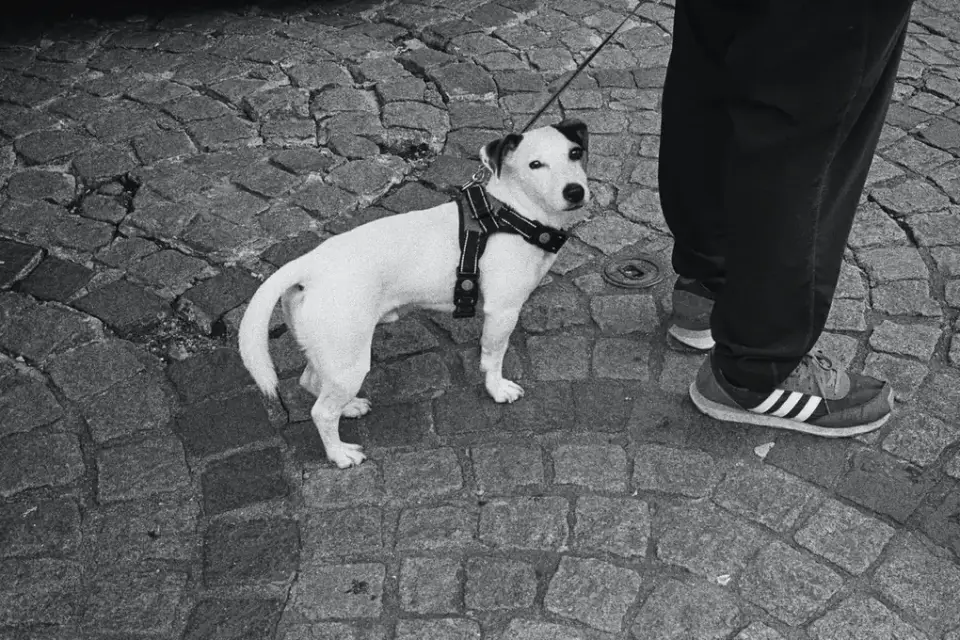
I worked through this tradeoff with a small terrier-type dog who loved fetch above everything. The owner, trying to tire him out before guests arrived, threw ball after ball for three straight evening sessions. The first night it seemed to help for ten minutes. By the third night the panting lasted an hour, the dog paced the hallway, barked at every sound, and grabbed pant legs when the ball stopped. More high-intensity reps had built endurance for frenzy rather than skill at settling. We cut the marathon fetch, kept one short play bout, and added sniff time and a chew on a mat instead.
That failed approach complicates the usual advice to just exercise more. Intensity and type matter as much as minutes.
A side-by-side check you can use today
Ask these three questions in order during the moment.
- Can they pause. Toss a handful of treats in grass or on a mat. An excited dog sniffs and eats. An overaroused dog runs past the food or grabs and keeps moving.
- Can they respond. Ask one well-known cue once, like touch or find it. Excitement allows a sloppy but willing answer. Overarousal brings staring through you, spinning, or vocalizing louder.
- Can they recover. Step behind a door or add six to ten feet of distance for 30 seconds. Excitement softens quickly. Overarousal stays high or climbs again at the next sound.
Play with other dogs muddies this picture, so it helps to know the difference between invitation and threat. If you are sorting out rough play, see Play Bow or Aggression? Reading Dog-to-Dog Signals.
What to do for each state
If it is excitement, ride with it and shape it. Reward four paws on the floor, teach a stationing spot near the door, and let the greeting happen at lower intensity. Keep sessions short and end while your dog is still able to listen.
If it is overarousal, lower the load first. Add distance, lower your voice, move calmly, and give the dog a simple job that uses the nose. Sniffing, licking, and chewing may help support settling because they are rhythmic and incompatible with leaping. Avoid leash pops, alpha rolls, or flooding the dog until they quit. Those methods may suppress behavior in the moment while leaving arousal high, which the American Kennel Club training resources also caution against for over-the-top greetings.
My position is direct: teach recovery before you proof obedience. A dog who can disengage and breathe will offer sits and downs for free. A dog drilled on cues without recovery skills will lose every cue when arousal spikes.
A friend once pushed back and asked whether this was splitting hairs, since both look happy. Fair question. The answer is practical, not semantic. Excited dogs still learn from rewards. Overaroused dogs do not, until their bodies come down. Treat the second like the first and you will repeat the same frustrating rehearsal.
When the usual plan has to bend
Some dogs live closer to the edge because of age, breed traits, or a thin history of rest. Adolescent herding and sporting dogs are classic examples, especially in busy homes.
One example that changed my threshold involved an adolescent herding-mix dog in a third-floor apartment, managed with two leash walks around the block each day. Weekdays were tight, weekends brought a half-mile trail walk plus visitors, and greetings fell apart every Saturday. The owner could not add more miles, so we changed the pattern instead. We moved greetings outside to twelve feet from the doorway, kept the leash loose on a harness, paid for eye contact, and let visitors toss treats behind the dog to create space rather than crowding forward. The half-mile decompression walk stayed. The indoor mob scene went away. Same dog, same energy, different setup.
If humping, mouthing, or vocalizing shows up mainly in these peaks, context helps. For one common trigger, see Is Humping a Dominance Behavior or Just Excitement?.
What open question will tell you that you read the moment right next time your dog lights up at the door.
Frequently asked questions
Is overarousal the same as hyperactivity?
No. Excitement is short and flexible. Overarousal is a temporary state where your dog cannot pause or respond, even though the trigger may be fun. True hyperactivity is rare and involves restlessness across many settings, not just exciting moments.
Should I correct jumping or mouthing during overarousal?
Prevention works better than correction in the moment. Add distance, lower stimulation, and reward settling. Then train the greeting at an easier distance where your dog can still think and earn rewards.
Does my dog need a calming supplement for overarousal?
Training, sleep, and daily routine come first. Some owners discuss calming supports with their veterinarian as part of a broader plan, but no chew replaces distance, rest, and rehearsal of calm greetings.
Sources
- Position Statements — American Veterinary Society of Animal Behavior