How to Build Up Exercise for an Overweight Adult Dog
A veterinary nutritionist explains how to safely increase activity for an overweight adult dog, from joint loading to a gradual walking plan.
For an overweight adult dog, steady walks and measured food matter more than weekend bursts of exercise.
On this page
Extra weight does not just slow a dog down, it changes how every step loads the joints. In an overweight adult dog, fat mass adds mechanical load while conditioning is usually low, so cartilage, tendons, and the synovial tissues that lubricate joints take more stress per minute of walking than they would at ideal body condition. That is why building exercise is a loading question first and a fitness question second.
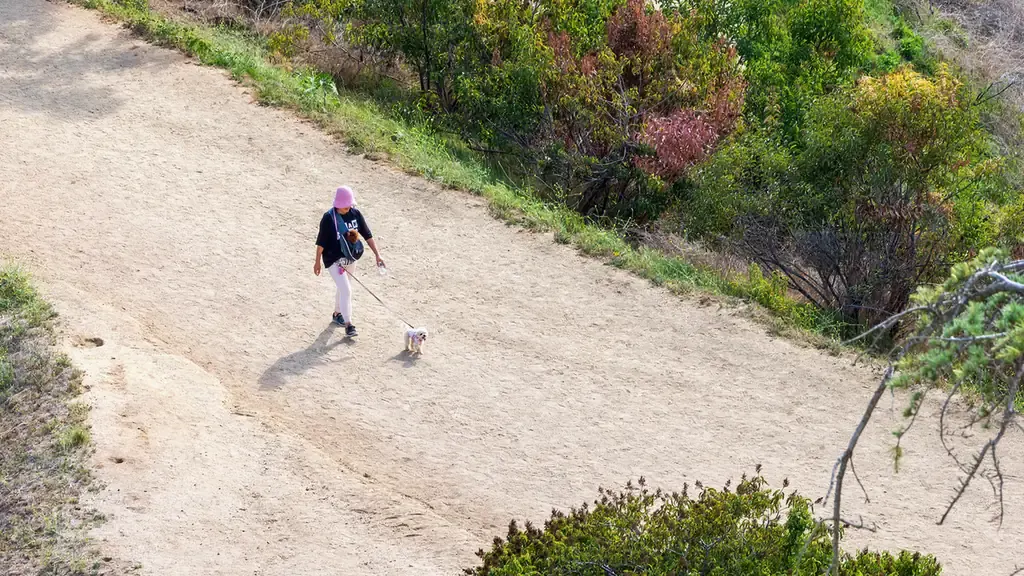
I saw this clearly with a composite case I return to often: a six-year-old, 94-pound Labrador retriever living in a suburban neighborhood, walked only for bathroom breaks for almost a year. His owner wanted to start with hour-long weekend hikes to help him lose weight. At the exam he panted after two blocks, sat down on mild hills, and was stiff the morning after longer outings. Instead of pushing duration, we set food measurement, a flat ten-minute route, and a recovery check the next morning as the decision points. By day 10, his morning stiffness after the same ten-minute loop was visibly less, and that response — not the calendar — told us when to add five minutes.
At the tissue level, articular cartilage has little blood supply and depends on cyclic, moderate loading to move nutrients and waste through the matrix. Short, regular walks create that pump mechanism. Long, infrequent efforts do the opposite, spiking inflammation and soreness that make the next walk harder.
Why carrying extra weight fatigues joints faster
Muscle fatigue matters as much as willpower here. When thigh and core muscles tire, more impact passes directly to joints rather than being absorbed by muscle. Overweight dogs fatigue earlier, so gait shortens, they shift weight forward, and elbows, hips, and stifles absorb uneven load.
Heat and breathing add another limit. Dogs cool mainly by panting, and excess insulation plus lower aerobic fitness means core temperature and respiratory rate climb faster, a pattern described in clinical overviews of obesity in dogs from VCA Hospitals. That is a signal to stop, not to push through.
This is also where diet leads exercise. No walking plan overcomes unmeasured food intake, and weight loss itself unloads joints with every step. Weigh meals, account for treats at under ten percent of daily calories, and track body condition score every two weeks alongside walk minutes.
What I prioritize before adding minutes
I prioritize three checks before progression: breathing recovery, next-day movement, and foot and gait symmetry. If panting takes more than ten minutes to settle at home, if the dog is stiff the next morning, or if lameness appears, we hold the current level rather than advance.
Surface and pace count. Flat grass or dirt, a sniffing pace the dog chooses, and a harness that does not pull on the neck reduce joint shear. Avoid fetch, dog-park sprints, stairs for conditioning, and hot pavement while fitness is low. For context on why steady walking often serves these dogs better than bursts, see Fetch vs. Structured Walks: Which Exercise Actually Serves Your Dog Better?.
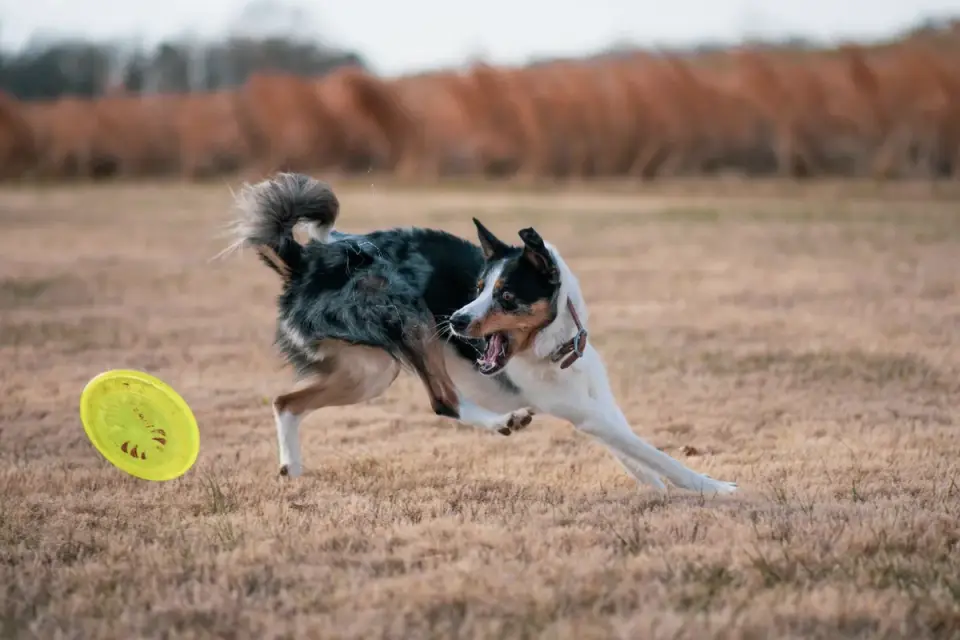
The second scenario is the one I want owners to avoid. A different composite example: a five-year-old, 78-pound mixed-breed dog whose owner, with good intentions, went from almost no walks to two 45-minute outings over one weekend, three weeks in to a new weight-loss effort. The first long walk looked fine. The second ended with lagging, heavy panting, and a sore, shortened stride on the right hind leg that lasted three days. That layoff cost more fitness than the weekend gained, and it is the classic tradeoff I see when motivation outruns tissue tolerance. We restarted at two ten-minute walks daily with a warm-up amble for the first three minutes, then added about five minutes per walk each week only when recovery stayed clean.
That measured progression is also easier to keep while life changes, a point covered well in How to Keep Your Dog’s Exercise Routine While Traveling.
A joint-aware walk-up plan that actually builds fitness
For most healthy but overweight adult dogs cleared by their veterinarian, this framework works in practice. Start with ten to fifteen minutes, once or twice daily, on flat ground at the dog’s pace. Keep that level for seven to ten days.
Add five minutes to one walk per week if recovery is normal. Aim over four to eight weeks toward thirty to forty-five minutes total daily, split into two sessions if needed. Split sessions protect joints while preserving calorie burn.
Warm up and cool down matter more than owners expect. Walk slowly for three to five minutes, allow sniffing, then settle into a steady pace, then ease off for the final three minutes. Guidance on simple pre-activity movements pairs well with this in Warm-Up Exercises Before a Dog Runs or Plays.
Stop a walk for open-mouth panting that does not ease with a slowdown, lagging or lying down, limping, or heat above about 80°F with humidity. Brachycephalic breeds, dogs with diagnosed orthopedic disease, and dogs with heart or respiratory disease need an individualized veterinary plan before any progression.
Consistency beats intensity.
Where joint-support nutrition realistically fits
Here is my evidence-bounded position: diet measurement and gradual loading do the real work, while selected joint-support ingredients may help support the joint environment around that work, not replace it. Ground an integrative claim in the nutritional evidence, and the boundary becomes clear.
Glucosamine and chondroitin are among the most studied joint support ingredients for dogs. That status comes from a veterinary review context, and in a more specific experimental model researchers reported that glucosamine can “prevent experimentally induced cartilage degradation in vitro” according to work published in the Journal of Veterinary Medical Science. In vitro protection is not proof of weight loss or pain relief in a pet dog at home.
Chondroitin has a similarly narrow, honest claim. A peer-reviewed study described that chondroitin “supports healthy synovial fluid homeostasis” in work published in Frontiers in Veterinary Science. Synovial fluid lubricates and nourishes cartilage, which is relevant to a stiff overweight walker, but homeostasis support is structure and function language, not repair.
Green-lipped mussel is often added for its omega-3 fatty acids and glycosaminoglycans studied for joint support, yet the strongest mechanistic quote I will use stays in the lab: “BMO, GMO, and KO all alleviated paw swelling in rats and reduced serum levels of rheumatoid factor (RF), anti-cyclic citrullinated peptide (anti-CCP) antibody, and pro-inflammatory cytokines such as TNF-α and IL-17.” That finding appeared in Nutrients. Rat paw data do not translate directly to an overweight Labrador’s hips.
The counterargument is fair: if a supplement might help, why not load several at once and walk harder? Because tolerance is set by load, heat, and diet, and over-supplementing can distract from measuring food and keeping walks regular. I still land on food plus gradual walks first, with a joint supplement as a possible adjunct after veterinary input — especially when stiffness limits consistency.
The edge case that changes the plan is the dog that looks willing but recovers poorly. I think of a composite eight-year-old, 68-pound pit bull-type dog, overweight by about nine pounds, who eagerly pulled through twenty-minute walks yet was slow to rise for two mornings afterward, by day 12 of the plan. Willingness masked low joint tolerance. For that dog we cut back to two eight-minute leash walks on grass, added three short sniff breaks, confirmed no lameness on exam, and only then rebuilt more slowly while keeping calories tight. Enthusiasm is not clearance.
If you build the base this way, fitness compounds. And for what to avoid along the way, Common Dog Exercise Mistakes Owners Make (And What to Do Instead) is a useful check before you add speed, hills, or off-leash bursts.
Frequently asked questions
How many minutes should an overweight adult dog start with?
For most healthy overweight adult dogs cleared by a veterinarian, 10–15 minutes once or twice daily on flat ground is a safe start. Add about 5 minutes per week only if breathing recovers quickly and there is no stiffness the next morning.
Should I walk an overweight dog once or twice a day?
Two shorter walks are usually better than one long walk. Split sessions provide similar activity with less joint fatigue and faster recovery.
Is fetch or running good for weight loss in an overweight dog?
No, not at first. Sprinting, hard stops, and jumping spike joint load. Build a base of steady leash walks for 4–8 weeks before your veterinarian clears higher-impact activity.
Sources
- Obesity in Dogs — VCA Hospitals
- Prevent experimentally induced cartilage degradation in vitro study — Journal of Veterinary Medical Science
- Synovial fluid homeostasis study — Frontiers in Veterinary Science
- Marine oil paw swelling and cytokine study — Nutrients