How to Meet the Exercise Needs of High-Drive Working Breeds
A veterinary nutritionist and sports-medicine guide to conditioning, fueling, and protecting high-drive working breeds without breaking them down.
A high-drive dog does not need to be exhausted every day — he needs work that conditions muscle, protects joints, and lets him switch off afterward.
On this page
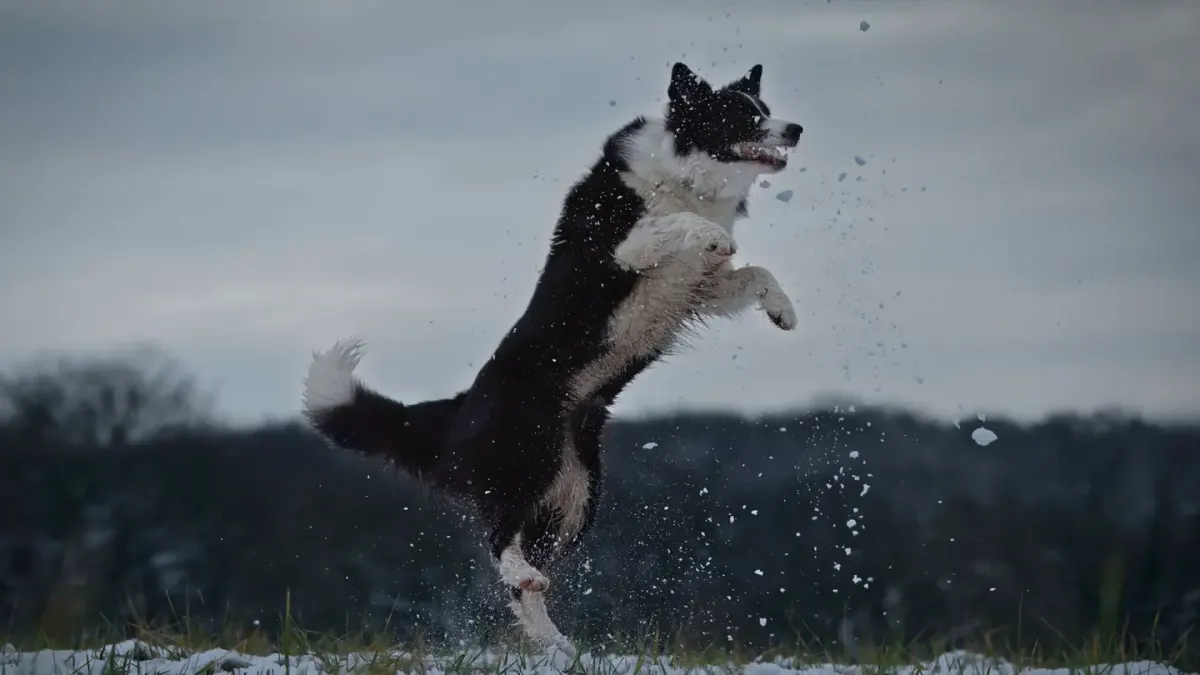
What does a fulfilled day actually look like for a dog bred to work? For a 3-year-old 52-pound Border Collie I followed through a farm-sit routine, it was not the 90-minute chuck-it session his owner had been using to “take the edge off.” It was 25 minutes of herding drills before breakfast, a midday sniff walk on a long line, and 15 minutes of directed retrieve with clear start and stop cues. By day 10 the pacing at the back door had faded, and his evening settle came an hour earlier without adding a single extra mile.
Drive is motivation, not durability. Herding breeds, shepherds, Malinois, retrievers selected for field work, pointers, and northern sled types share efficient aerobic metabolism, high musculoskeletal stiffness under load, and a nervous system that recovers slower than muscle does. That combination explains why repetitive ball-chasing tires the legs while winding up the brain.
Why exhaustion fails high-drive dogs
Aerobic fitness builds quickly in these breeds, but tendon, cartilage, and bone adapt far more slowly. Cardiac output and mitochondrial density improve in weeks; collagen turnover and joint conditioning take months. When exercise is only about distance or repetitions, owners raise cardiovascular fitness faster than structural tolerance.
That mismatch is where overuse shows up: a dog that can run farther but lands stiffer, takes longer to warm out of a down-stay, or needs more arousal to feel satisfied. The physiology is straightforward — muscle generates force, tendon transmits it, and articular cartilage distributes it with help from synovial fluid. Load without progression and rest does not strengthen that chain.
Drive does not protect joints.
I weigh that chain as a nutritionist first. Food therapy and supplement science may help support diet, mobility, and recovery around training, but neither replaces graded conditioning, sleep, body-condition control, and skill work that teaches impulse control.
When more fetch makes a harder dog to live with
A 2-year-old 68-pound German Shorthaired Pointer came to me on a program of two daily fetch sessions, about 120 throws a day, plus weekend trail runs. Three weeks in, his owner reported the core tradeoff: recall was worse, not better, restlessness between sessions had increased, and he was bunny-hopping up the back steps after hard days. The owner’s question was whether to add a third session or a weighted vest.
Neither would have addressed the mechanism. High-repetition, high-deceleration fetch trains anticipation and peak eccentric load on shoulders, carpus, and iliopsoas, with little lateral strength, postural endurance, or nose work that lowers arousal. Cutting fetch to twice weekly, substituting hill walking, controlled tug with outs, and 20-minute scent problems, kept total active time similar while spreading load across tissues. By week four he rose cleaner in the morning, though his top-end sprint stamina for continuous retrieving was slightly lower — the honest tradeoff of protecting joints first.
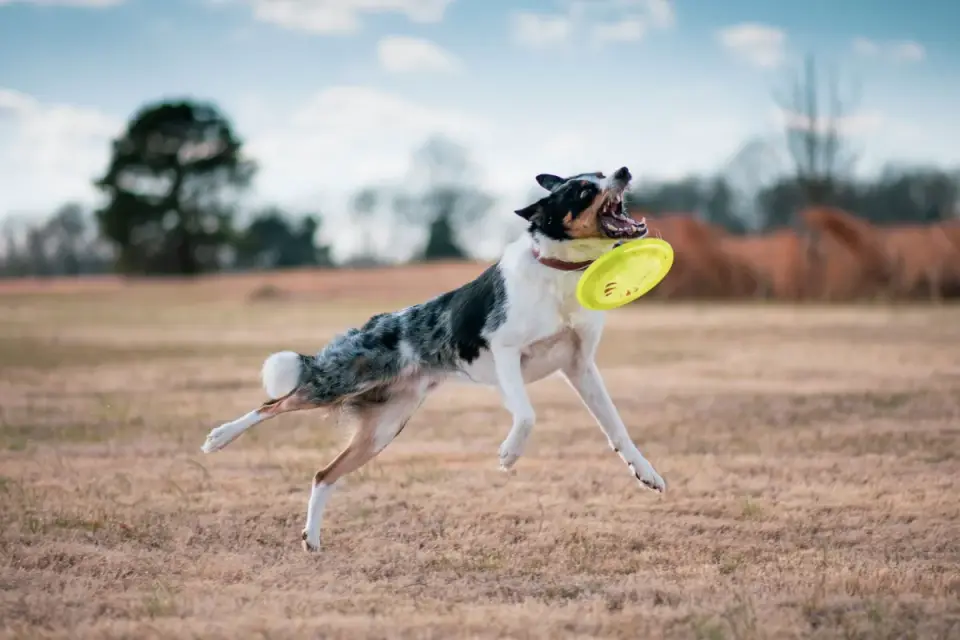
That case is why I do not rank exercise tools as good or bad. I compare what each tool loads and what it leaves out. For dogs that live for the chase, Fetch vs. Structured Walks: Which Exercise Actually Serves Your Dog Better? explains the joint cost of repetition, and Off-Leash Play vs. On-Leash Walks: Which One Actually Exercises Your Dog? is useful for splitting free movement from conditioning.
How much work is enough, and how to build it
There is no single minute target that fits a Malinois cadet prospect and a 7-year-old 74-pound Labrador retriever from show lines. I start owners with structure rather than a stopwatch: most healthy adult working breeds do well with 60–120 minutes of total active time daily, divided into two or three bouts, with at least one bout devoted to skill or nose work rather than pure locomotion.
Build that volume from a base of brisk walking and sniffing, then layer intensity. Warm muscle before sprinting or jumping — Warm-Up Exercises Before a Dog Runs or Plays gives a practical sequence owners can do in five minutes. Keep hard deceleration days separated by 48 hours, keep weekly increases near 10%, and keep one full easy day. Puppies under 18 months, seniors, and any dog carrying extra weight need shorter progressions and more low-impact strength, not forced endurance.
Watch recovery markers more than mileage: resting respiratory rate overnight, willingness to warm up within 5 minutes, symmetry at trot, appetite, and ability to settle within 30 minutes after work. Soreness beyond 24 hours, reluctance to jump into a familiar vehicle, or escalating demand for more stimulation are signals to reduce intensity and add rest, not push through.
Food, body condition, and where joint support fits
Working dogs often eat like athletes and still run lean, which tempts owners to look for a powder that carries the program. Diet still does more of the work. Feed to a lean body-condition score of 4–5/9, meet complete-and-balanced adult requirements for protein and essential fats, time the main meal away from hard exertion to reduce gastrointestinal upset, and offer water before, during, and after prolonged work, especially in heat.
Supplements sit inside that frame. Glucosamine and chondroitin are among the most studied joint support ingredients for dogs, and I use them that way — as support for the mobility system around conditioning, not as repair for poor programming. The nutritional evidence is specific and bounded: chondroitin “supports healthy synovial fluid homeostasis” in work summarized by Frontiers in Veterinary Science, while glucosamine work is often preclinical, including data that it can “prevent experimentally induced cartilage degradation in vitro” as reported by the Journal of Veterinary Medical Science.
Green-lipped mussel is in the same category. It “contains omega-3 fatty acids and glycosaminoglycans that have been studied for joint support,” and mechanistic work on related marine lipids reported that “BMO, GMO, and KO all alleviated paw swelling in rats and reduced serum levels of rheumatoid factor (RF), anti-cyclic citrullinated peptide (anti-CCP) antibody, and pro-inflammatory cytokines such as TNF-α and IL-17” according to Nutrients. That rat-model finding does not translate directly to a working Collie, but it helps explain why nutritionists consider these ingredients for joint nutrition alongside weight control and graded load.
The strongest counterargument is fair: if conditioning, rest, and leanness are dialed in, a joint supplement may add little measurable benefit for a young, sound dog. I still land on using foundational joint nutrition for high-volume working dogs because the cost of supporting synovial and cartilage nutrition is low relative to the cumulative load these dogs accept, provided owners do not use it as permission to skip rest days. Avoid the pattern in Common Dog Exercise Mistakes Owners Make (And What to Do Instead) — supplementing a weekend-warrior schedule instead of smoothing it.
The edge case that changes the plan
Not every high-drive dog can be conditioned up. A 6-year-old 61-pound Dutch Shepherd in flyball training looked fit and eager, but at trial weekends she would fade by Sunday afternoon and come home stiff through the lumbar muscles until Tuesday. Her weekday program was excellent; the problem was environment. Travel, crating, broken sleep, warm-up without cool-down, and three weeks in a row of competition stacked fatigue faster than home training ever did.
We cut her trial entries by a third, added leash walks between runs, protected an evening down-time routine, and kept her food amount stable but split into smaller meals on race days. Her Sunday speed was marginally slower on paper, yet her Monday-morning trot was symmetrical for the first time that season. For dogs that travel to work, that recovery-first approach matters more than any single conditioning drill.
My recommendation stays evidence-bounded: condition the whole dog with progressive strength, skill, and aerobic work, feed lean and consistently, rest deliberately, and use joint nutrition to may help support mobility and recovery through the load you have chosen carefully — not to justify load you have not earned.
Sources
- Evidence on synovial fluid homeostasis — Frontiers in Veterinary Science
- Evidence on glucosamine and cartilage models — Journal of Veterinary Medical Science
- Evidence on marine lipids and joint inflammation models — Nutrients