Indoor Exercise for a Rainy Week
A practical 7-day indoor exercise plan for dogs stuck inside, with joint-smart loading, food therapy, and recovery.
A rainy week does not have to mean a stiff, restless dog — plan indoor exercise like joint loading.
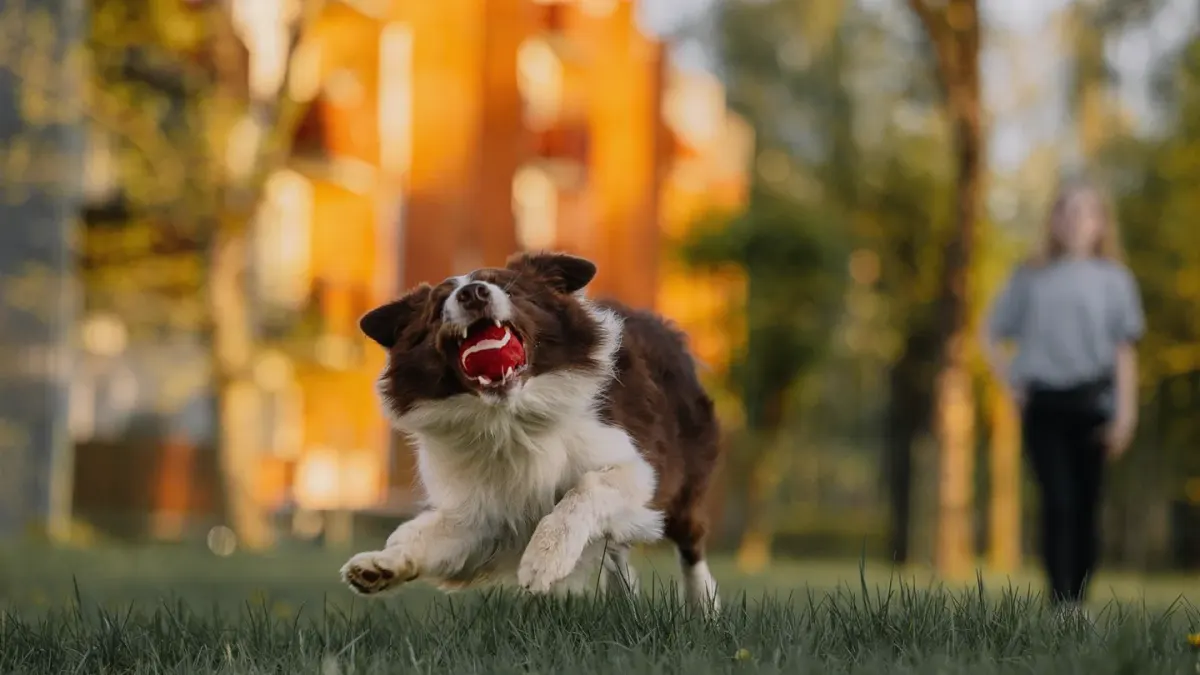
Rain is falling sideways on Tuesday morning, the sidewalk is slick, and your dog is already pacing the hallway with that look. This is where indoor exercise for a rainy week earns its keep: short, planned bouts that burn energy without pounding joints on hard floors.
I start every stuck-inside week the same way. A 4-year-old, 62-pound pit mix I followed through a wet February is a good example of the decision in front of you. By day 3 without a walk he was mouthing leashes, counter-surfing, and sleeping in restless 20-minute bursts. His owner wanted to tire him out with an hour of hallway fetch. We chose the opposite: three 10-minute training blocks before dinner — sit to stand, hand-target recalls down the hall, and search games for kibble — plus a weighed dinner on time. By day 5 his settle on a mat stretched to 90 minutes, and the kitchen surfing stopped because the work asked his brain and hind limbs to share the load.
That tradeoff — mental work plus controlled body work instead of frantic running — is what I want you to prioritize all week.
Days one and two: drain energy without hammering joints
Do this today. Clear one non-slip path. Lay a yoga mat, runner, or interlocking foam tiles down a hallway. Walk the route in socks first; if you slide, your dog will too.
Run two or three 5- to 10-minute sessions, separated by at least an hour:
- Warm up for two minutes. March in place with your dog, do five slow sit-to-stands, and five nose-to-hand follows each direction. I borrow this order from basic rehab warm-ups, and you can build your own version from Warm-Up Exercises Before a Dog Runs or Plays.
- Train strength. Backward walking for 10 feet, step-ups onto a stable platform, and down-to-stand. Keep reps low and reward calm resets.
- Feed the nose. Scatter half the meal in a snuffle mat or across the mat path. Sniffing lowers arousal faster than another throw of the ball.
Keep food steady. I weigh meals during low-activity weeks because indoor dogs often need slightly less energy, and body condition drives joint load more than any powder or chew. That is food therapy in plain clothes: adequate protein, controlled calories, fresh water always available.
Where does joint nutrition fit here? Weigh what a supplement can realistically do for diet, mobility, and recovery. Glucosamine and chondroitin are among the most studied joint support ingredients for dogs, and the reason I still use them for stiff, active, or aging dogs is loading: indoor floors, stairs, and sudden turns change how synovial fluid and cartilage handle friction. Research described as “supports healthy synovial fluid homeostasis” in Frontiers in Veterinary Science captures that maintenance role, and laboratory work noting it can “prevent experimentally induced cartilage degradation in vitro” is reported in the Journal of Veterinary Medical Science. Evidence is thin for instant pain relief, and no ingredient replaces weight control and smart loading.
Days three and four: the middle-week slump
This is where most plans fail. Owners try to make up for missed miles with one big indoor blowout.
A 7-year-old, 78-pound Labrador taught me that tradeoff the hard way three winters ago. By day 4 of rain his owner set up 30 minutes of tile-hallway fetch to “get the zoomies out.” By minute 18 he was sliding into the turn, panting with his mouth wide and commissures pulled back. That night he refused the last three stairs and needed coaxing off the couch. We scrapped fetch, switched to 8-minute scent circuits and platform strength twice daily, and added rugs to the turn. By day 10 he was climbing into the car without a pause again, which told us the problem was repetitive shear and fatigue, not fitness.
Do shorter instead. Cap any chase game at three throws. Replace the rest with search, tug with rules, and obstacle problem-solving at a walk.
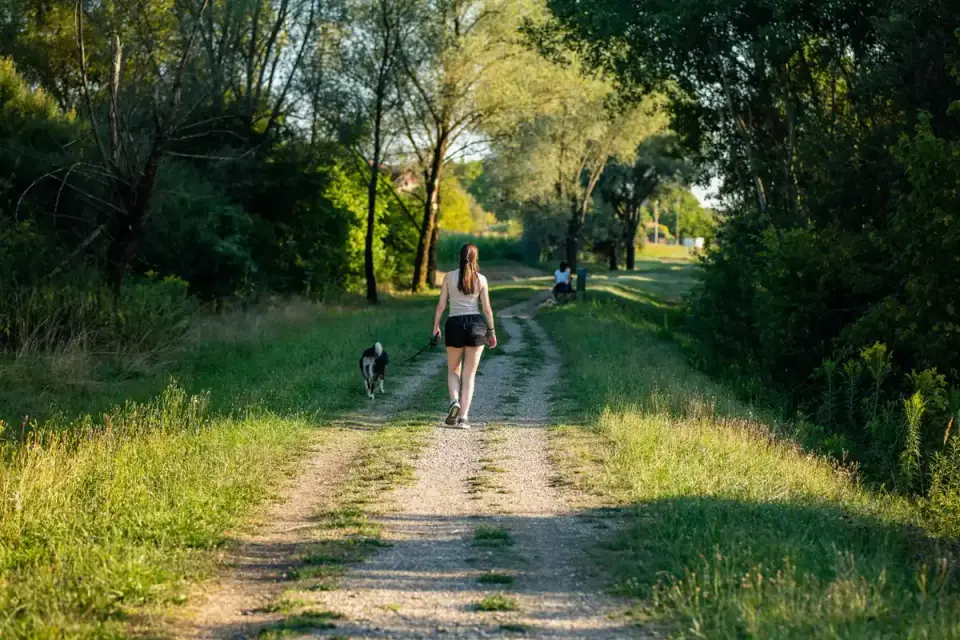
Plan the middle like this: morning nose work, midday strength, evening calm handling and massage along the back and thighs. Watch for the signs I watch for — lagging on turns, wide hind stance, licking a carpus or hock, or quitting a game that usually excites. Those are stop signs, not disobedience. I outline the same stop-and-adjust rules in Common Dog Exercise Mistakes Owners Make (And What to Do Instead).
Green-lipped mussel is the other ingredient I get asked about on wet weeks, because owners hope an omega-rich chew will cover for lost activity. Ground an integrative claim in the nutritional evidence: it contains omega-3 fatty acids and glycosaminoglycans studied for joint support, and one mechanistic paper reported that “BMO, GMO, and KO all alleviated paw swelling in rats and reduced serum levels of rheumatoid factor (RF), anti-cyclic citrullinated peptide (anti-CCP) antibody, and pro-inflammatory cytokines such as TNF-α and IL-17.” in Nutrients. That is rat and cell-level data, not proof your dog will feel looser by Friday. It may help support normal joint structure as part of a complete diet, nothing more dramatic.
Days five through seven: keep the routine you built
An 11-year-old, 24-pound senior terrier mix shows the edge case that changes the prescription. At her age and weight, three weeks in to a rainy season she was not restless — she was rusting up. Her owner worried exercise would hurt arthritic elbows, so they skipped everything. By day 6 she took 14 steps to rise from her bed in the morning versus her usual four, and her evening potty walk shortened to the curb. We added back four-minute indoor circuits: warm water on a towel for paws, slow leash laps around the kitchen island, three sit-to-stands, then food in a puzzle. Within four days her morning rise dropped to six steps, and she chose to follow her owner upstairs once daily again.
Seniors need frequency, not intensity.
Finish your week with a repeatable template you can keep when the sun returns. Keep sessions short and joint-smart.
The strongest counterargument is fair: why not just rest all week and restart outside when it clears? Rest sounds joint-protective. I land against full rest because stiffness, muscle loss, constipation, and behavior fallout accumulate faster than fitness returns, especially in seniors and heavy, athletic breeds. Controlled indoor loading preserves range of motion and routine without the slip-and-sprint injuries I see after a week on the couch.
Carry one habit outside with you.
Frequently asked questions
How much indoor exercise does my dog need on a rainy day?
Most healthy adult dogs do well with 20 to 30 total minutes split into two or three short blocks of training, nose work, and controlled strength, plus potty breaks. Watch breathing, gait, and willingness to continue rather than chasing a fixed number.
Is hallway fetch okay indoors?
Use it sparingly. Limit to a few throws on a non-slip surface with a straight line and no sharp turns, then switch to search games or tug with rules to avoid slides and repetitive joint shear.
Should I feed less when my dog exercises less?
Often yes, slightly. Weigh meals, watch body condition and stool, and cut treats or training calories from the daily ration so a low-activity week does not add weight that loads joints.
Sources
- Synovial fluid homeostasis study — Frontiers in Veterinary Science
- Cartilage degradation in vitro study — Journal of Veterinary Medical Science
- Marine oil paw swelling and cytokines study — Nutrients