Is It Normal for an Older Dog to Eat Less?
Why senior dogs eat less, what gradual appetite change means, and the red flags that call for a vet visit.
A little less food can be normal as dogs age, but the eating pattern tells you when to worry.

A 13-year-old mixed-breed dog comes in for a senior check after three weeks of leaving a quarter of her morning kibble behind. Her owner worries she is fading, yet her weight holds at 52 pounds, her walks stay steady, and her bloodwork from six months ago was unremarkable. That split — a smaller appetite with an otherwise stable dog — is where this question usually lives. Appetite does tend to drift down with age, but age alone never explains a sharp or selective change.
The physiology helps explain why. Older dogs generally carry less lean muscle, move less through the day, and turn over energy more slowly. Olfaction dulls, taste receptors lose sensitivity, and dental disease makes chewing uncomfortable. Gastric motility can slow, so a dog feels full longer. Hormonal shifts, reduced thirst drive, and early kidney or liver change can blunt hunger before any other sign appears. In other words, the differentials for hyporexia in a geriatric dog span normal metabolic slowing, oral pain, endocrinopathy, chronic kidney disease, gastrointestinal disease, immune-mediated disease, neurologic decline, medication effect, and pain elsewhere that suppresses the desire to stand at the bowl.
I work that differential before I reassure anyone. My position is this: a gradual, symmetric decline of 10–20% in intake over months, with stable weight and energy, can be monitored with diet adjustments at home. Anything abrupt, asymmetric, or paired with weight loss, vomiting, diarrhea, polydipsia, lethargy, or food avoidance deserves an examination and laboratory work rather than coaxing. What would change my mind is prospective evidence that prolonged calorie decline without evaluation is safe in seniors; that evidence does not exist, and current senior-care guidance points the other way.
When a smaller appetite fits normal aging
Metabolic need falls as muscle mass falls. A dog that once ate four cups daily may hold weight on three and a half. Teeth wear, gums recede, and mild periodontal pain makes hard kibble less appealing. Smell drives palatability, and an older nose finds food less exciting, especially when served cold from storage. VCA Hospitals notes that senior dogs benefit from routine veterinary monitoring precisely because these gradual shifts overlap with early disease, which is why pattern matters more than any single meal.
Watch the trend across two to four weeks. Note total daily intake, not one bowl. Note whether the dog eats slowly but finishes, walks away then returns, prefers soft textures, or leaves the same amount every day. Stable body condition, normal stool, normal thirst, and willingness to take treats and walk point toward physiologic slowing. Progressive loss, even slow loss, does not.
A home routine that tests the benign causes first
Start with mechanics, not supplements. Warm food to just below body temperature to release aroma. Add warm water or low-sodium broth and soak kibble for 10 minutes to soften it. Feed smaller, more frequent meals — three modest meals instead of one or two large ones — because a smaller stomach and slower emptying tolerate volume poorly. Raise the bowl for a stiff-necked or arthritic dog, use a wide, shallow dish for whisker-sensitive muzzles, and feed in a quiet, non-slip spot away from young dogs.
Track intake in grams or cups for seven days. Weigh every two weeks on the same scale.
That failed approach I see often looks like this: over two weekends an owner of an 11-year-old cattle-dog type tries rotisserie chicken, then cheese, then three different toppers across five nights to restart interest. The dog eats enthusiastically on night one of each change, then refuses again by night two, and the owner concludes she is simply picky. The novelty masks the real signal — she chews only on the left side, drops kibble, and bleeds faintly at the gumline when chewing a dental treat. Appetite stimulants by variety cannot bypass oral pain, and each new food resets the observation window. When the pattern is excitement followed by refusal, the mouth, not the menu, needs the examination.
If softening, warming, and schedule changes restore steady intake within a week, you have supported normal function with husbandry. If intake still drifts, stop rotating foods and call the clinic.
Red flags that move this out of the normal column
Dental pain is common, but the differential widens quickly in seniors. Merck Veterinary Manual describes how aging dogs face overlapping risks from organ dysfunction, neoplasia, and musculoskeletal pain, all of which can suppress appetite before producing localizing signs.
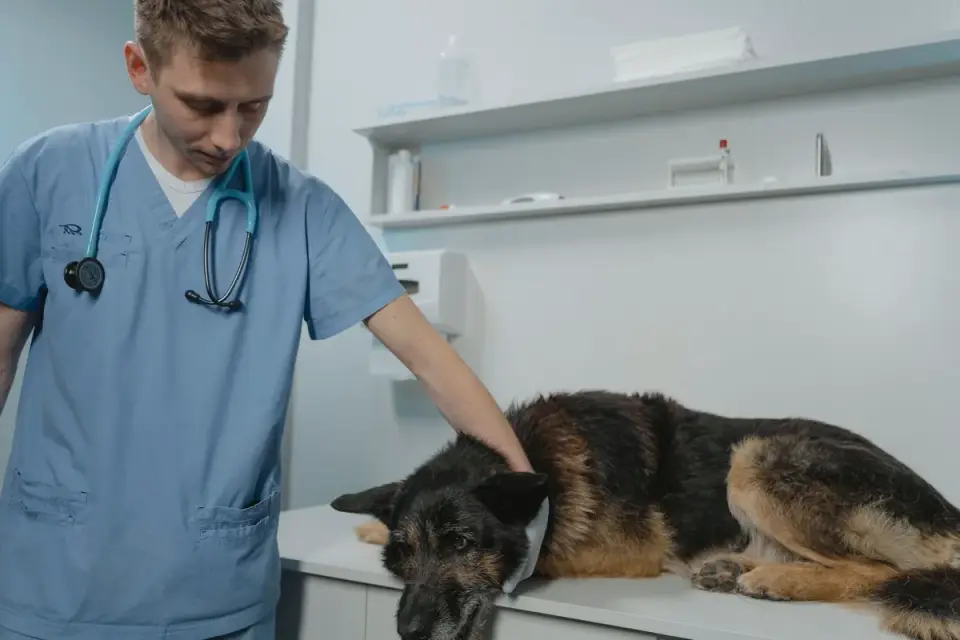
Seek prompt veterinary care for refusal lasting more than 48 hours, eating less than half of normal for more than two days, rapid weight loss, drooling, pawing at the mouth, bad breath with bleeding, vomiting, diarrhea, increased thirst and urination, panting at rest, abdominal pain, new lumps, cough, or marked lethargy. Selective eating — refusing kibble but taking soft treats — points toward mouth or esophageal pain. Eating grass, lip-licking, and nighttime restlessness with reduced meals point toward nausea. A dog that approaches the bowl eagerly then walks away may have nasal congestion, dental pain, or neck pain on lowering the head.
Laboratory work, oral examination under appropriate conditions, weight history, and medication review usually sort this out. Prednisone, NSAIDs, antibiotics, and some cardiac or neurologic drugs alter appetite or cause gastrointestinal upset. Cognitive change, covered in Why a Senior Dog Gets Disoriented in Her Own Backyard, can also disrupt learned feeding routines; a dog that forgets where the bowl sits may appear anorectic.
The bend in the usual advice comes with a dog that cannot safely eat more. A 14-year-old small terrier with early kidney disease and 9 pounds of body weight starts leaving food after his veterinarian prescribes a renal-support diet and twice-daily fluids over a 10-day transition. His owner wants to push volume to protect weight. Here the plan reverses: rather than increasing quantity, she feeds the prescribed amount in four small meals, offers water before meals, keeps phosphorus-restricted treats consistent, and reports intake and 9-pound weight checks weekly instead of improvising with high-phosphorus toppers. When organ disease constrains the diet, consistency and monitoring protect normal function better than calories from the wrong source. Similar diet-first thinking applies to texture and safety questions such as Can Dogs Eat Mushrooms? A Vet Nutritionist’s Field Guide and Can Dogs Eat Onions? Yes, They’re Toxic — Here’s Why.
Supplements described as supporting normal cellular function have a narrow place here. They do not restore appetite or replace diagnosis, and evidence in dogs for appetite effects remains thin.
Gradual eating less can be part of aging. Unexplained eating less is information. Treat the bowl as a daily laboratory test: measure it, change one variable at a time, and let persistence decide the next step.
Frequently asked questions
How much less is normal for a senior dog to eat?
A slow decline of roughly 10-20% over months with stable weight and energy can fit normal aging. A sudden drop, refusal beyond 48 hours, or ongoing weight loss needs veterinary evaluation.
Should I switch foods if my older dog eats less?
First try warming and softening the current diet, feeding smaller meals more often, and tracking intake for 7 days. If intake does not stabilize, seek an exam rather than cycling through new foods.
When should I call the vet about reduced appetite?
Call promptly for complete refusal over 48 hours, eating less than half normal for over two days, weight loss, vomiting, diarrhea, increased thirst, mouth pain, lethargy, or selective eating that suggests oral pain or nausea.
Sources
- Senior Dog Care — VCA Hospitals