Passionflower for a Dog Anxious Around Houseguests: What It Does and Doesn't Do
A neurology-informed guide to passionflower for guest-related anxiety in dogs, covering GABA mechanisms, evidence limits, and practical home steps.
Passionflower may ease an anxious dog around houseguests, but training and routine matter more.
On this page
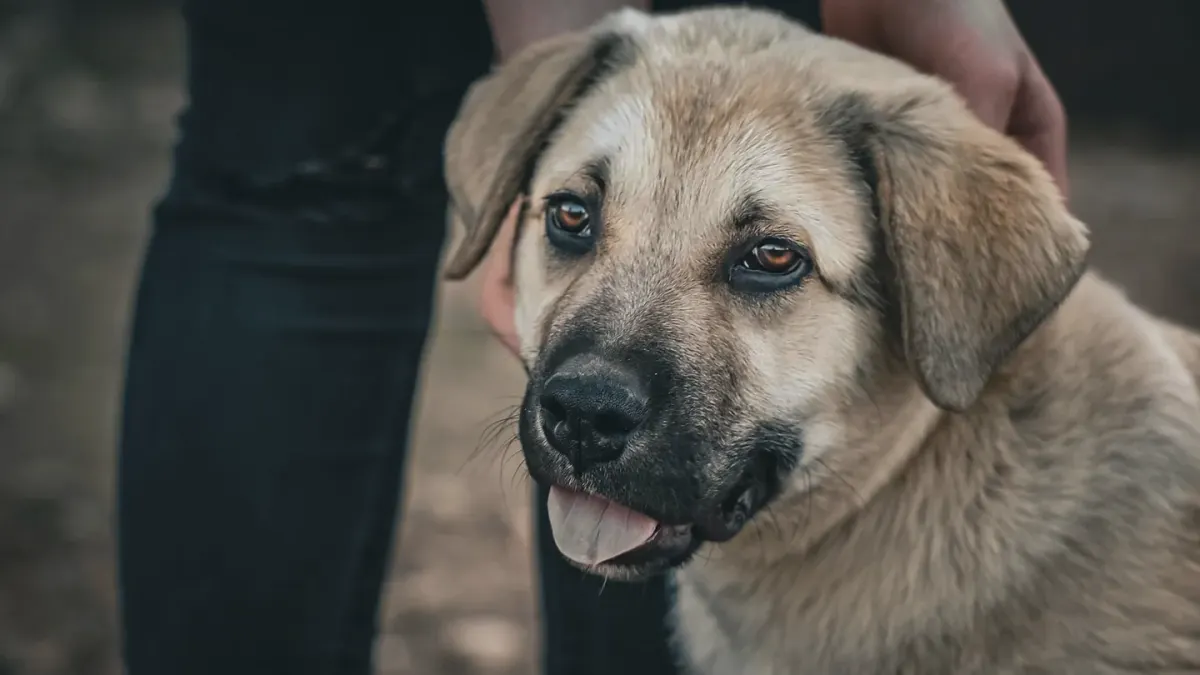
The doorbell rings and a six-year-old 52-pound Lab mix bolts from the rug, nails clicking across the hardwood as voices fill the entryway. Her owner watches her pant, pace between the couch and hallway, then settle into hard staring at every new face that walks in. By day 10 of the holiday season, with visitors coming three nights a week, the pattern is fixed: trembling during dinner, barking at movement, then hiding upstairs. The question on the counter is a bottle of passionflower chews, and whether that herb can change how her nervous system handles houseguests.
Why houseguests push the nervous system over threshold
New people in the home combine noise, movement, odor, and disrupted routine. For a sensitive dog, sensory input converges on arousal circuits that drive vigilance, vocalization, and flight. The spinal cord and brainstem carry that signal upward, the limbic system tags it as uncertain, and the hypothalamic-pituitary-adrenal axis sustains the response.
Passionflower is usually discussed in that context because flavonoids and related constituents have been studied in laboratory models for interaction with GABA signaling, the main inhibitory system that damps excessive excitation in the central nervous system. In plain terms, support for calm behavior depends on whether inhibition can keep up with excitation.
That mechanism is plausible, but plausibility is not proof in dogs.
What passionflower can support, and where treatment begins
Here is the gap I name with every neurologic supplement: supporting normal inhibitory tone is not the same as treating an anxiety disorder, panic, or aggression. Passionflower falls on the support side.
Direct trials in dogs with guest-directed anxiety are lacking. That places passionflower with many other botanicals where, as summarized in MDPI Biomedicines, “For the remaining species, evidence is derived mainly from preclinical studies or traditional use.” Traditional use for relaxation is long, and rodent models suggest anxiolytic-like activity, but we cannot translate that into a predictable effect size for a dog facing a living room full of people.
So my evidence-bounded recommendation is this: consider passionflower only as an adjunct to behavior management for mild situational unease around visitors, not as a stand-alone fix for severe fear or guest-directed aggression.
The strongest counterargument is reasonable: why use an herb with thin canine data when management and prescription options have clearer pharmacology? My answer is scope. For dogs with mild restlessness that still eat, explore, and recover quickly, owners often want a low-intensity option to pair with training. For dogs that freeze, snap, try to escape, or stay dysregulated for hours, that logic reverses and veterinary behavioral care comes first.
How I would use it around a visit
A second scenario shows the tradeoff. A four-year-old 34-pound cattle dog mix did well on quiet days but barked and mouthed sleeves when four adults arrived for dinner. His owner tried a passionflower chew alone 30 minutes before guests, three weeks in a row, and saw the same escalation by the second hour. What changed the next weekend was not a higher dose. It was a closed bedroom with a chew toy, white noise, and greeting only one calm guest at a time on leash from a distance.
That sequence matters. Set up the environment first, then judge whether any supplement adds anything.
A practical visit-day plan
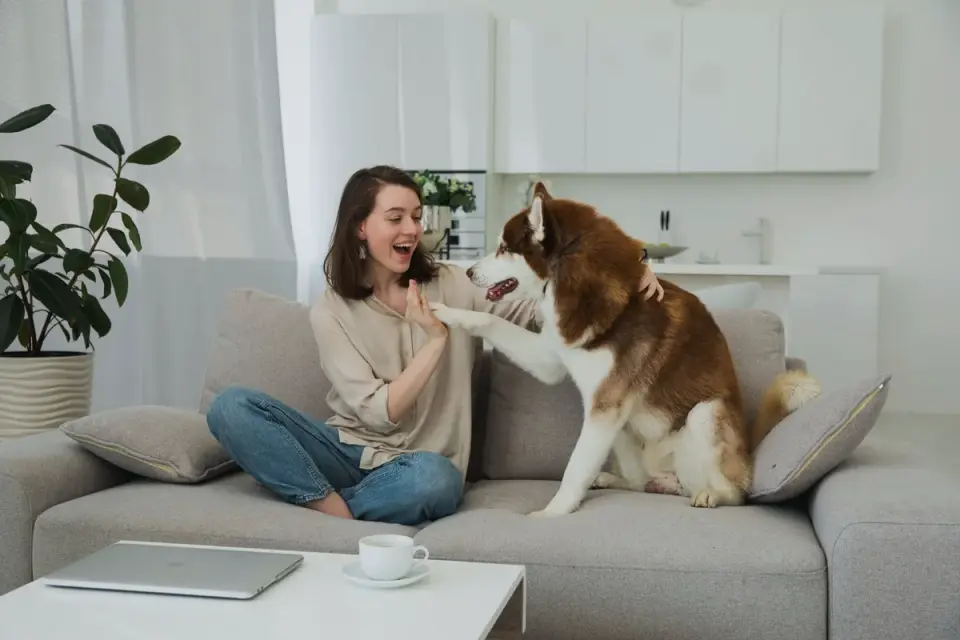
Use the same routine each time so you can read the dog. Exercise earlier in the day, feed on schedule, and give the dog a decompression walk before people arrive. Stage a quiet room with water, a familiar bed, and a long-lasting chew. Let the dog choose distance, and avoid forced greetings, hugs, or passing treats from strangers if that increases conflict.
If you and your veterinarian decide to try passionflower, discuss product quality, other ingredients in the formula, concurrent medications, and timing relative to the event. Do not combine multiple calming herbs, antihistamines, or sedatives on your own. Seizure control, liver disease, pregnancy, and use with CNS depressants deserve explicit veterinary review because the nervous system has little margin for stacking depressant effects.
When the pattern points elsewhere
A third situation changes the calculus. An eight-year-old 18-pound terrier who had always tolerated company began pacing, whining, and urinating near the door when visitors stayed past two hours, and by week three was also restless on quiet nights. That late-onset shift raised concern for pain, cognitive change, urinary disease, or sensory loss rather than simple guest anxiety. Blood work and an orthopedic and neurologic exam came before any calming supplement.
That is the support-versus-treatment line in practice.
Short-term arousal that resolves is different from sustained distress.
For context on alternatives with more human data, Cureus notes that “A systematic review analyzed multiple RCTs and concluded that ashwagandha has a moderate positive impact on stress reduction and cognitive performance.” That finding does not transfer directly to dogs or to houseguest behavior, but it illustrates why I rank training, predictability, and veterinary diagnosis above any single botanical. Readers comparing options can learn more from L-Theanine vs. Valerian Root for Anxious Dogs: Which One Actually Helps? and, for dogs whose stress shows up as gut signs, from CFU Count vs. Strain Diversity on Dog Probiotic Labels: What Actually Predicts Results.
If guest visits consistently trigger freezing, growling, snapping, escape attempts, or prolonged recovery, skip the supplement aisle and seek veterinary and qualified behavior help. Passionflower does not retrain an association with strangers, and no chew replaces distance, choice, and a safe resting place.
Frequently asked questions
Should I give passionflower every day or only before houseguests arrive?
There is no established canine protocol for guest-related anxiety, so timing and duration should be set with your veterinarian. Daily use without a behavior plan rarely changes the response to visitors.
Can passionflower replace training for greeting guests?
No. Distance, a quiet resting space, controlled introductions, and reward-based training address the learned association. Any supplement is at most an adjunct.
When should I call my veterinarian instead of trying a calming herb?
Seek care for aggression toward guests, panic or escape attempts, prolonged recovery, or any sudden behavior change in a middle-aged or senior dog.
Sources
- Herbal Anxiolytics Review — MDPI Biomedicines
- Ashwagandha Stress and Cognition Systematic Review — Cureus