Swimming for Dogs With Joint Problems and Arthritis
A veterinary nutritionist and sports-medicine guide to using swimming for stiff, arthritic dogs — when it helps, when it hurts, and how to build sessions safely.
For a stiff, arthritic dog, a calm, supported swim can preserve the muscle that protects sore joints without the pounding of daily walks.
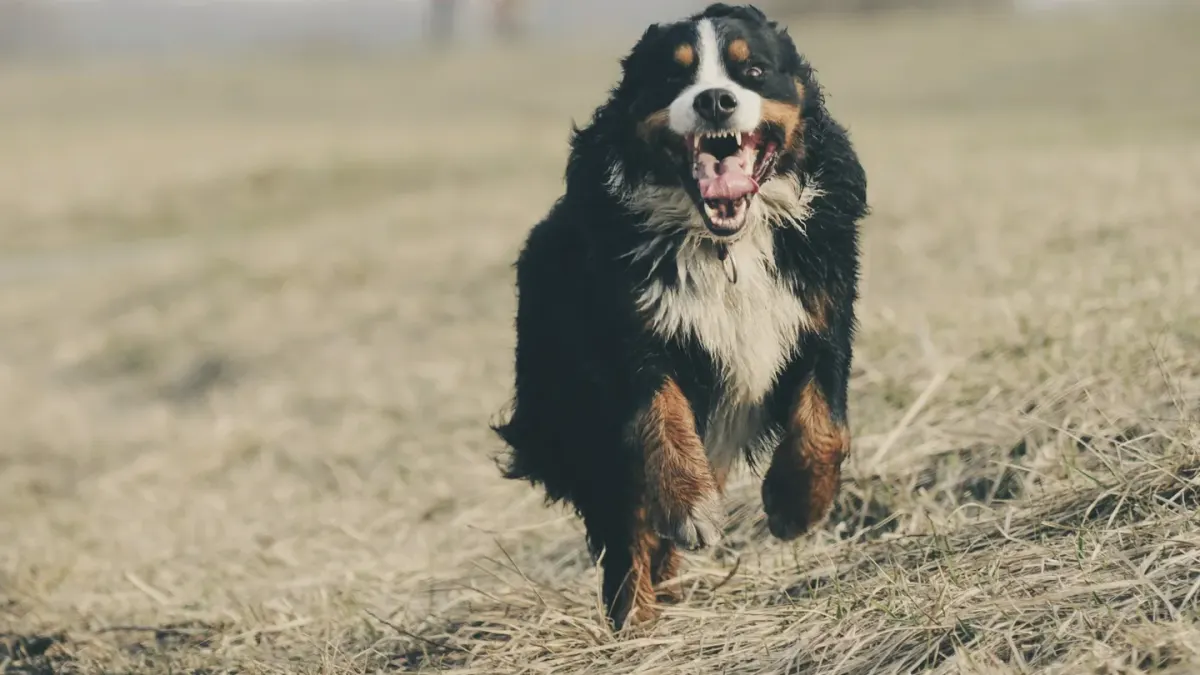
For a stiff, arthritic dog, a calm, supported swim can preserve the muscle that protects sore joints without the pounding of daily walks.
The myth I correct most often is that swimming is automatically safe because it is low impact. Buoyancy does unload the joints, but cold water, a slippery ramp, a panicked scramble out of a pool, and ten minutes of hard retrieving can load a shoulder or back harder than a walk ever would. The benefit comes from how you swim the dog, not just that you get him wet.
An owner brought me a familiar picture last spring with his 11-year-old, 72-pound Golden Retriever who would rise stiff from his bed, warm out of it on a slow walk, then fade at about fifteen minutes with a short hind-limb stride. Radiographs showed bilateral hip arthritis and early spondylosis, and the owner was weighing daily carprofen against doing less and watching muscle melt away. We kept his food steady for lean weight, kept his short morning walk, and added one assisted swim a week in a warm therapy pool with a vest and a handler in the water. Three weeks in, his rise time shortened and his thigh circumference held, which let us keep medication at the lowest effective dose with his primary veterinarian.
That decision — swim to protect muscle — is the core reason I use water for arthritic dogs. On land, every step loads cartilage and the sore joint capsule. In water, buoyancy carries much of that body weight while the dog still has to push with the glutes, hamstrings, and shoulders to move forward. Muscle is joint protection. When hind-limb muscle shrinks, hips and stifles take more shear with every step, and that is where diet and lifestyle do more than any powder or chew.
Swimming does not fix arthritis itself. What it can do is help support the tissues around the joint while you manage pain, weight, and strength with your veterinarian. Ground an integrative claim in the nutritional evidence here: chondroitin is studied in part because it “supports healthy synovial fluid homeostasis,” as reported in Frontiers in Veterinary Science, and glucosamine HCl has been shown to “prevent experimentally induced cartilage degradation in vitro,” according to the Journal of Veterinary Medical Science. Those findings may help support whole-patient health alongside exercise and weight control, but they do not rebuild a worn hip or replace pain management.
Why water changes the load, not just the workout
On a walk, load is repetitive and vertical. On a good swim, load is distributed and the range of motion is more continuous through the shoulders, hips, and spine. That is useful for a dog that is stiff after rest but loosens with gentle motion, the classic arthritic pattern. It is less useful for a dog with an unstable cruciate injury, a recent surgery, severe neurologic weakness, or uncontrolled cardiac disease, where unguarded swimming can do real harm.
Temperature and control matter as much as duration. I prefer warm water when we can get it, a non-slip entry, a well-fitted vest for older dogs, and a person controlling pace and direction. Short, level swimming with rest breaks beats a long, frantic session. Watch the dog, not the clock: even breathing, level body position, and steady hind-limb kicks mean you are in the right zone. Vertical treading, wide eyes, tucked hind legs, or a head held high to stay up means stop.
I learned that tradeoff the hard way with a 6-year-old, 45-pound Border Collie mix whose owner had swapped pavement walks for daily lake fetch to spare her elbows. She loved it and would sprint, leap off the bank, swim hard after the bumper, then scramble up the muddy slope to go again. By day 10 she was forelimb lame and sore through her neck and lower back, not because swimming is bad but because explosive jumping, twisting retrieves, and that bank scramble overloaded exactly the joints we meant to rest. We replaced bank fetch with two five-minute leashed swims from a ramp with full rest between, kept her on flat sniff walks for the rest of the week, and her gait evened out without needing to abandon water entirely.
How to build a swim that actually serves the joints
Start smaller than you think. For a dog that has not swum in months, five minutes of easy swimming with a minute or two of rest in the middle is plenty, once or twice a week. If recovery the next day is good — no prolonged stiffness, no reluctance on stairs, no panting at rest — add two to three minutes the following week. Most arthritic pets do best at ten to fifteen minutes total, and very few need more than twenty.
Keep the entry and exit boring. Carry or ramp-assist small and painful dogs, rinse off chlorine or lake water, dry ears, and offer a warm resting spot afterward. Cold, shivering dogs tighten up and move worse the next day. If your dog coughs, swallows a lot of water, tires abruptly, or needs help staying level, end the session and talk with your veterinarian before repeating it.
Food and body condition set the ceiling for what swimming can do. Extra fat is extra load on every step between swims, and inadequate protein makes it harder to hold muscle during a rehab period. I weigh what a supplement can realistically do for diet, mobility, and recovery: ingredients like glucosamine, chondroitin, and green-lipped mussel may help support joint structure and comfort as part of a complete diet, and green-lipped mussel work has shown that “BMO, GMO, and KO all alleviated paw swelling in rats and reduced serum levels of rheumatoid factor (RF), anti-cyclic citrullinated peptide (anti-CCP) antibody, and pro-inflammatory cytokines such as TNF-α and IL-17” in Nutrients, but none of that replaces lean weight, measured feeding, and consistent low-impact work.
The strongest counterargument deserves a direct answer. Some clinicians argue that controlled walking is enough and swimming adds risk, cost, and stress without proven superiority for arthritis. They have a point for mild, stable dogs that walk well and hold muscle on land. I still land on supervised swimming as the better lever once walks shorten, stairs become hard, or muscle loss begins, because water lets us dose muscle work without dosing concussion.
That choice gets sharper at the edges. A 13-year-old, 18-pound terrier mix I followed could no longer tolerate a fifteen-minute walk and panicked in deep water despite a vest, which seemed to close the door on swimming. Instead of forcing it, we used chest-deep wading at a slow pace along a pool shelf for six minutes, twice weekly, with a handler supporting his chest. By week four he was rising with less hesitation and holding his weight better on his hind limbs, a reminder that for tiny, anxious, or neurologically fragile dogs, controlled wading often serves joints better than true swimming.
What I would actually do this week
If your dog is stiff but still enjoys movement, keep the walk you know works and add one short, calm swim rather than replacing everything at once. Compare options honestly with Swimming vs Walking for an Arthritic Dog: How to Choose (and When to Do Both) and audit the rest of the week for hidden joint load with Common Dog Exercise Mistakes Owners Make (And What to Do Instead). Many owners find that cutting fetch and adding structure helps as much as the pool itself, a tradeoff I walk through in Fetch vs. Structured Walks: Which Exercise Actually Serves Your Dog Better?.
One good swim will not change arthritis.
A season of them, paired with lean weight and steady medication review with your veterinarian, often does change how the dog moves through the day.
Sources
- Chondroitin and synovial homeostasis in dogs — Frontiers in Veterinary Science
- Glucosamine and experimental cartilage degradation — Journal of Veterinary Medical Science
- Marine oils, paw swelling and inflammatory markers in rats — Nutrients