What Does Your White Fluffy Dog Need to Stay Comfortable?
Daily brushing, skin checks, and calm handling keep a white fluffy coat comfortable and healthy.
A white fluffy dog stays healthier when daily brushing and skin checks become routine care.
On this page
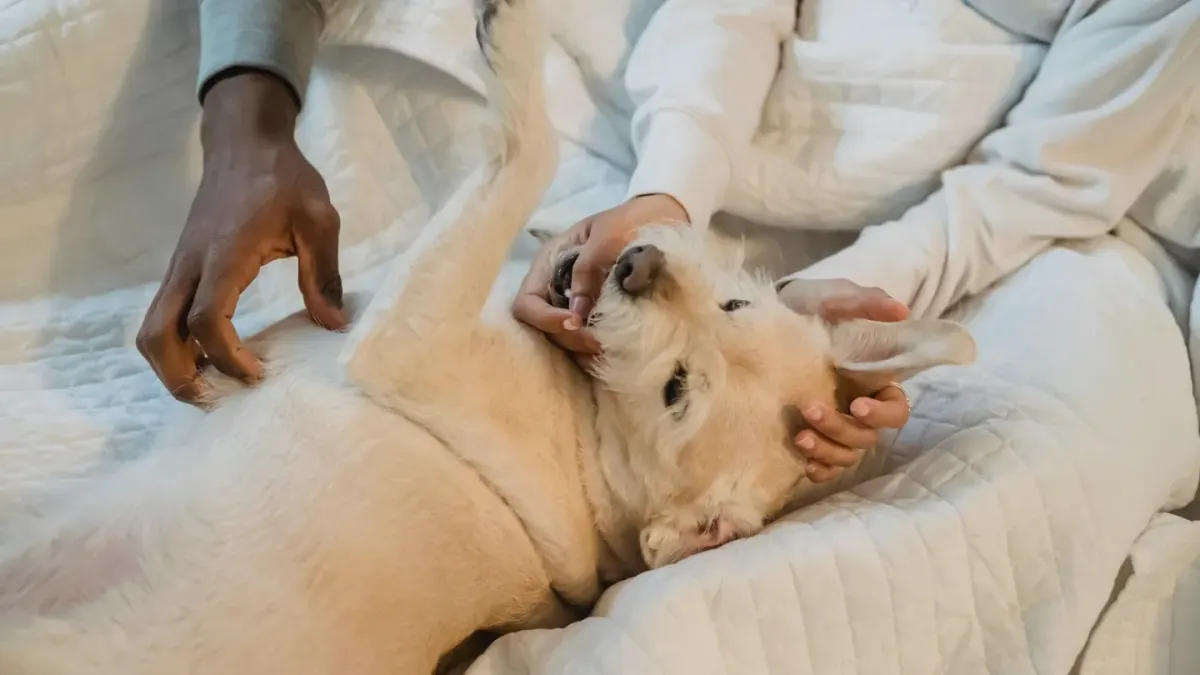
That white cloud following you around the house looks soft, but living in it is work for your dog. A white fluffy dog shows every speck of dirt, every tangle, and every itchy spot, and that visibility is actually useful if you treat grooming as wellness rather than looks.
Vets often see fluffy, light-coated dogs come in uncomfortable not because owners don’t care, but because mats and dry skin built up quietly under a pretty top layer. The fix is rarely a fancy haircut. It is a short daily routine that supports comfort, skin barrier function, and calmer handling over time.
Why white fluff mats faster than you expect
Fine undercoat plus longer guard hairs trap moisture, pollen, and friction from harnesses and collars. Behind the ears, under the front legs, around the collar, and along the belly are the first places to felt.
Mats pull with every step. That pulling may help support irritability, scratching, and avoidance of petting or brushing, which owners sometimes read as a behavior problem when it started as discomfort.
Build your baseline around prevention. The American Kennel Club notes that regular brushing and routine grooming checks help owners spot tangles, debris, and skin changes early, before they turn into painful mats. For most white fluffy coats, that means a 3- to 5-minute brush most days, not a long session once a month.
Use a slicker or pin brush followed by a steel comb. If the comb won’t glide through to the skin, don’t yank. Work from the ends inward, hold the base of the hair, reward, and stop before your dog says no.
What the skin under the fluff is telling you
Part the coat once or twice a week and look. Healthy skin is clean, without strong odor, heavy flaking, redness, or damp hot spots.
White coats show tear staining, brown beard staining, and pinkish saliva staining more clearly. Those stains themselves aren’t diagnoses, but persistent licking, chewing paws, rubbing the face, or scratching can signal dryness, allergens, or irritation that deserves a vet visit.
Diet and lifestyle come first here. Balanced nutrition, fresh water, regular exercise, flea prevention, and clean bedding do more for coat quality than any quick fix. VCA Hospitals describes a healthy coat as smooth and shiny with clean, supple skin, and notes that changes in coat character or excessive shedding warrant veterinary attention.
Keep baths modest. Too-frequent bathing can dry skin, especially in winter. When you do bathe, use a gentle dog-formulated shampoo, rinse thoroughly, dry completely to the skin to prevent matting and chill, and brush out again once dry.
This is slow care.
It pays off in fewer tangles and a dog who trusts your hands.

Make grooming feel safe instead of stressful
Many fluffy dogs don’t dislike brushing. They dislike being held still, surprised, or hurt.
Keep handling low-stress. Same spot, same order, short sessions. Let your dog stand or lie on a nonslip mat, feed a few small treats for holding still, brush one zone, then release. If your dog freezes, lip-licks, yawns repeatedly, moves away, or guards a spot, pause and try a lighter touch or a different time of day.
Daily life affects cooperation too. A dog who has had a walk, a sniff, and a chance to settle will tolerate care better than a wired dog straight from the yard. If you are working on calm alone-time habits, the same predictability that helps with alone-time training for a newly adopted rescue dog helps with grooming — same cue, same place, boring and brief. Restlessness while you brush can also overlap with general boredom signals, so it helps to know how to tell boredom from separation anxiety rather than assuming defiance.
Skeptical friend question: do I really need to brush every day? Not perfectly. But for dense white fluff, skipping a week often means a shave-down later, which is harder on skin and trust than a few minutes of maintenance.
A routine you can do today
Keep it preventive, and keep timelines realistic. Coat change takes 4 to 8 weeks to show, so judge progress by comfort first — less scratching, easier brushing, calmer handling — not by whiteness.
Try this:
Wipe paws and belly after wet walks to prevent felting, check for burrs, then comb the friction spots — behind ears, armpits, collar line, tail base — for two minutes. Twice a week, part the coat to the skin in three spots and sniff and look for redness, flakes, odor, or sores. Trim hair that traps eye discharge or drags in urine, keep nails short so feet stand correctly, and clean combs and brushes so you aren’t dragging oil and grit back through.
Call your veterinarian if you find persistent redness, hair loss, scabs, a strong yeasty odor, nonstop itching, or a mat tight to the skin. Don’t cut a tight mat with scissors; skin tents up into mats easily.
A white fluffy dog doesn’t need to look like a show photo. A clean, loose, touchable coat that lets you see skin early and handle your dog without a struggle is the win, and it starts with today’s five minutes.
Frequently asked questions
How often should I brush a white fluffy dog?
Most dense, fluffy coats do best with a brief 3- to 5-minute brush most days, focusing on friction spots like behind the ears, armpits, and the collar line. Use a comb to check your work down to the skin.
Why does my white dog look pink or brown around the eyes and mouth?
Moisture from tears and saliva can stain light hair. Gentle daily wiping and keeping face hair trimmed may help support cleanliness, but persistent tearing, odor, or skin redness should be checked by your veterinarian.
Are frequent baths good for keeping white coats white?
No. Bathing too often can dry the skin. Brush regularly, spot-clean paws and belly after walks, bathe with a gentle dog shampoo only as needed, and dry completely to the skin.
Sources
- Coat and Skin Appearance in the Healthy Dog — VCA Hospitals