Why Is My Dog Suddenly Scared Of Men? Causes and Calm Fixes
A food-first integrative guide to why a dog suddenly fears men, how to rule out pain, and how diet, routine, and training help maintain calm behavior.
Sudden fear of men often traces to pain, a scary moment, or thin socialization — steady routines can help maintain calm.

On this page
Last Tuesday a neighbor stopped by with soup, and Milo, a six-year-old 54-pound Lab mix who has greeted that same porch for years, backed into the hallway with his tail tucked and barked at the delivery driver an hour later. His owner swore nothing had changed, yet by day 5 the pattern was clear: women guests earned a wag, men earned distance, lip-licking, and a low crouch behind the couch. That split is what brings most owners to search why is my dog suddenly scared of men, and it deserves a careful look rather than a label of stubborn or dominant.
In my food-first practice I start with structure and function. Fear changes posture, appetite, digestion, and sleep because the stress response shifts how the body maintains normal nervous system balance. Food-therapy reasoning in plain whole-patient terms means I first support the gut, sleep, and daily rhythm that helps maintain a steady baseline, then layer training on top. That position holds even when supplements sound faster.
My evidence-bounded recommendation is this: rule out pain and sensory change first, then rebuild trust with distance-based desensitization paired with diet and lifestyle support that may help support relaxation. The strongest counterargument is to start calming chews or botanicals right away for quick relief. I understand the pull, especially at midnight with a panting dog, and ingredients like L-theanine, chamomile, and KSM-66 ashwagandha do have traditional or early research interest. Still, without addressing the trigger and the daily structure, support stays thin.
When Friendliness Turns to Fear Overnight
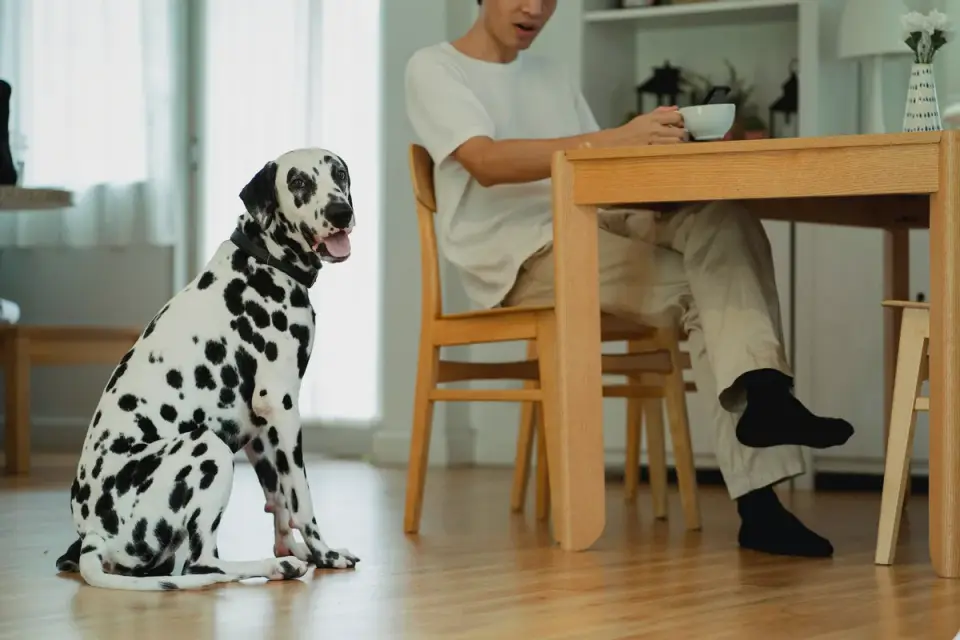
Sudden fear rarely means your dog decided to dislike men. Dogs generalize by sound, shape, and movement, so deeper voices, taller silhouettes, hats, beards, cologne, or a heavier footfall can blur together after one scare. A slipped leash, a loud laugh overhead, a man who tripped over the dog in the dark, or a painful ear infection handled by a male technician can create a lasting association.
Medical shifts matter more than owners expect. Hypothyroidism, orthopedic pain, ear or eye changes, and gastrointestinal upset lower tolerance for startle. A dog who feels sore may help maintain comfort by avoiding the person who last reached over his head. Senior dogs losing vision often startle at looming shapes first.
Consider context, too. A move, new work hours, a baby, less exercise, or inconsistent feeding times can erode the routine that helps maintain normal stress resilience. Hunger, fragmented sleep, and long alone stretches leave less buffer for novelty.
What I Check Before Calling It Behavior
I map the timeline on paper. When did avoidance start, who was present, what happened in the 48 hours prior, and does fear happen with all men or only in certain places. Fear limited to the hallway or the car points toward a place memory. Fear of all unfamiliar men, indoors and out, points toward generalization or pain.
Then I watch the body, not the story. Turning away, yawning, paw lift, tucked tail, lowered crouch, retreating to a crate, refusing treats he normally takes, or loose stool after guests are observable markers of stress load. Appetite and stool tell me how digestion is supporting the nervous system day to day.
A veterinary exam comes next for any sudden change, especially in a dog over seven, a dog with recent limping, head-shaking, appetite drop, or nighttime restlessness. Pain, thyroid shifts, and sensory loss can mimic fear. Training alone cannot fix a sore hip.
He settled with women but not men by the second week, and that split guided our plan.
Food, Rhythm, and Rest That Help Maintain Calm
This is where my food-first reasoning leads. A predictable feeding schedule, adequate protein for steady amino-acid supply, fiber-rich vegetables in balanced amounts, fresh water, and a quiet resting spot help maintain normal digestive function and daily rhythm. Dogs who eat at odd hours, graze all day, or miss walks often show more pacing and vigilance at night.
I lean on what owners can do today: two measured meals, a morning sniff walk plus a shorter evening walk, ten minutes of nose work or scatter feeding, and a consistent bedtime wind-down without wrestling or loud play. Chewing, licking mats, and snuffle mats support self-soothing behavior through repetitive oral activity.
Supplements sit in a supporting role, never as the fix. MDPI published a review noting that, quote: “For the remaining species, evidence is derived mainly from preclinical studies or traditional use.” That line keeps me honest about chamomile and related botanicals. Traditional herbal care has a long history for supporting relaxation, yet the direct dog data remain thin. Cureus summarized human research with the conclusion that, quote: “A systematic review analyzed multiple RCTs and concluded that ashwagandha has a moderate positive impact on stress reduction and cognitive performance.” That finding does not transfer directly to dogs, so I treat it as context, not proof.
L-theanine follows the same pattern. Human reviews have explored doses including 400 mg per day for eight weeks in specific anxiety contexts, which tells us researchers take its calming properties seriously without giving us a dog dose. For dogs, plain language matters: these ingredients may help support calm behavior within a full plan, and diet, sleep, and training move the needle first. For readers weighing quick options, this comparison of prescription calm versus chews for storm fear shows why daily structure still matters, and this explainer on strain diversity versus CFU count on probiotic labels helps frame gut support without overpromising.
The second case complicated my tidy plan. A three-year-old 42-pound cattle-dog mix had sailed through basic classes, then after a weekend boarding stay she began barking at her owner’s brother and, by three weeks in, refused to take chicken from any male hand. We tried high-value treats tossed from a distance, and she shut down further when the men looked at her. The failed approach was luring her closer too fast with food she loved; pressure poisoned the reward. Stepping back to greater distance, sideways posture, and no reaching rebuilt curiosity within ten days, though doorway greetings stayed fragile. The tradeoff was clear: slower distance work looked unimpressive, yet it preserved appetite and willingness where flooding had erased both.
Rebuilding Trust Without Flooding
The American Veterinary Society of Animal Behavior emphasizes humane, reward-based methods for fear, and that aligns with structure-and-function thinking. Fear eases when the dog controls distance and good things happen at a tolerable range.
Ask male helpers to ignore the dog at first. Sideways stance, soft voice, no direct stare, no reaching over the head. Toss treats behind the dog so retreat pays, rather than luring forward. Short sessions of three to five minutes beat long standoffs. End while the dog still takes food and moves loosely.
Pair the helper with ordinary, non-threatening routines. A man refills the water bowl and steps away. A man drops a snuffle mat and leaves the room. A man joins a familiar walk at twenty feet without talking to the dog. Predictability helps maintain normal exploratory behavior.
Avoid corrections for growling, barking, or retreating. Those signals communicate discomfort. Flooding by holding the collar for forced petting, crowding into a corner for “proof” he is friendly, or passing him among strangers for exposure tends to deepen avoidance and can raise bite risk.
Medication has a place for panic, generalized anxiety, or stalled progress, decided with your veterinarian. Daily structure plus short training sets the stage for any additional support to work.
The edge case arrived late in the month. An eleven-year-old 68-pound shepherd mix who adored his retired owner suddenly sidestepped the owner’s son and grandson, both tall men with deep voices, while staying warm with daughters. By day 12 the owner noticed nighttime pacing, cloudy eyes, and a yelp when rising. Bloodwork and radiographs pointed to hip discomfort plus early vision change, not a training gap. Once pain care, rugs for traction, nightlights, and slower greetings were in place, his willingness to approach men in daylight returned within three weeks. The lesson reshaped our rule: new fear of one group in a senior dog warrants a medical workup before any behavior label sticks.
Where This Actually Lands
Return to Milo from the opening. Pain check was clear, routine had slipped after a schedule change, and one startling doorway encounter had stuck. We restored two measured meals, morning decompression walks, a crate den with white noise, and five-minute distance sessions where men tossed treats and moved away. His first loose tail wag at ten feet came around week two.
My position stays food-first and function-minded. Support digestion, sleep, movement, and predictability that helps maintain calm structure, use gentle distance work as the core, and view botanicals as optional background support where evidence is thin. That combination respects both the dog’s body and his learning.
Frequently asked questions
Why is my dog suddenly scared of men but not women?
Dogs often generalize by voice pitch, height, scent, and movement. A scare, pain episode, or vision change linked to a man can generalize to similar people, while familiar women still feel safe. Track timing, setting, and body signs, and ask your veterinarian to rule out pain first.
Should I have men give my dog treats to fix fear?
Treats help only at a distance where your dog stays relaxed and still takes food. Have helpers toss treats and move away without eye contact or reaching. If your dog refuses food, pants, tucks, or retreats, increase distance and shorten the session.
Do calming supplements stop fear of men?
No supplement rewrites a fear memory. Balanced meals, sleep, exercise, and reward-based distance work do the main work. Some botanicals and amino acids have traditional use or early human research for stress support, but direct dog evidence is limited — use them only as background support with veterinary guidance.
Sources
- Chamomile evidence review — MDPI
- Ashwagandha systematic review — Cureus
- AVSAB Position Statements on Humane Training — American Veterinary Society of Animal Behavior